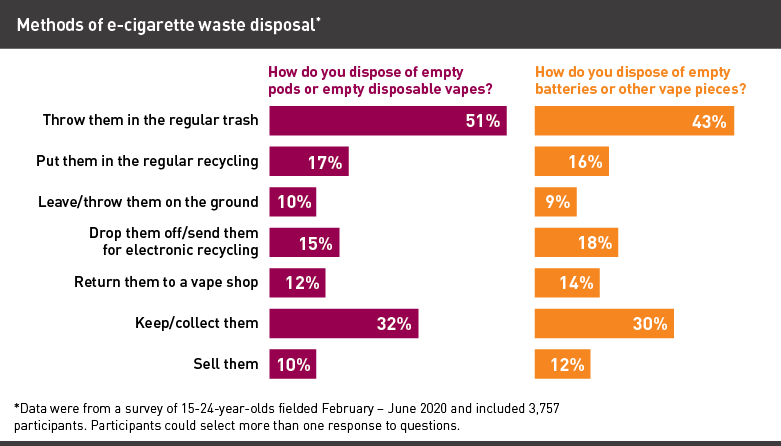
E-cigarette sales have had a reported 399.473% increase in retail sales from 2015-2020. With such a dramatic rise in e-cigarette sales, our environment suffers the consequences.
What's in an E-cigarette?
Most e-cigarettes contain plastic, nicotine salts, heavy metals, mercury, and flammable lithium-ion batteries. Similar to tobacco cigarettes, one of the most prominent environmental concerns is that they refuse to biodegrade, even under severe conditions.
Why are they Dangerous?
Lying around for decades, heavy metals are absorbed into our waterways and soil, contaminating our drinking water, harming wildlife, and stunting plant growth. The plastic from e-cigarettes is broken down into finer particles, called microplastics, which in addition to harming our earth, have the ability to affect our health by disrupting normal organ function and leading to serious health issues. When disposed of improperly, the lithium-ion batteries can cause fires at waste facilities, and even in your own home. Unfortunately, more than half of e-cigarette users simply dispose of the devices and pods in the trash, increasing the risk of these fires.
Resources
For more information on the environmental effects of e-cigarettes and safe disposal options, explore the links below!
Learn more:
NY Smoke Free
Truth Initiative
E-cigarette Disposal Options:
Dane County Clean Sweep


.png)
.png)